Valentine’s Day is for Love, Love is essential for Community

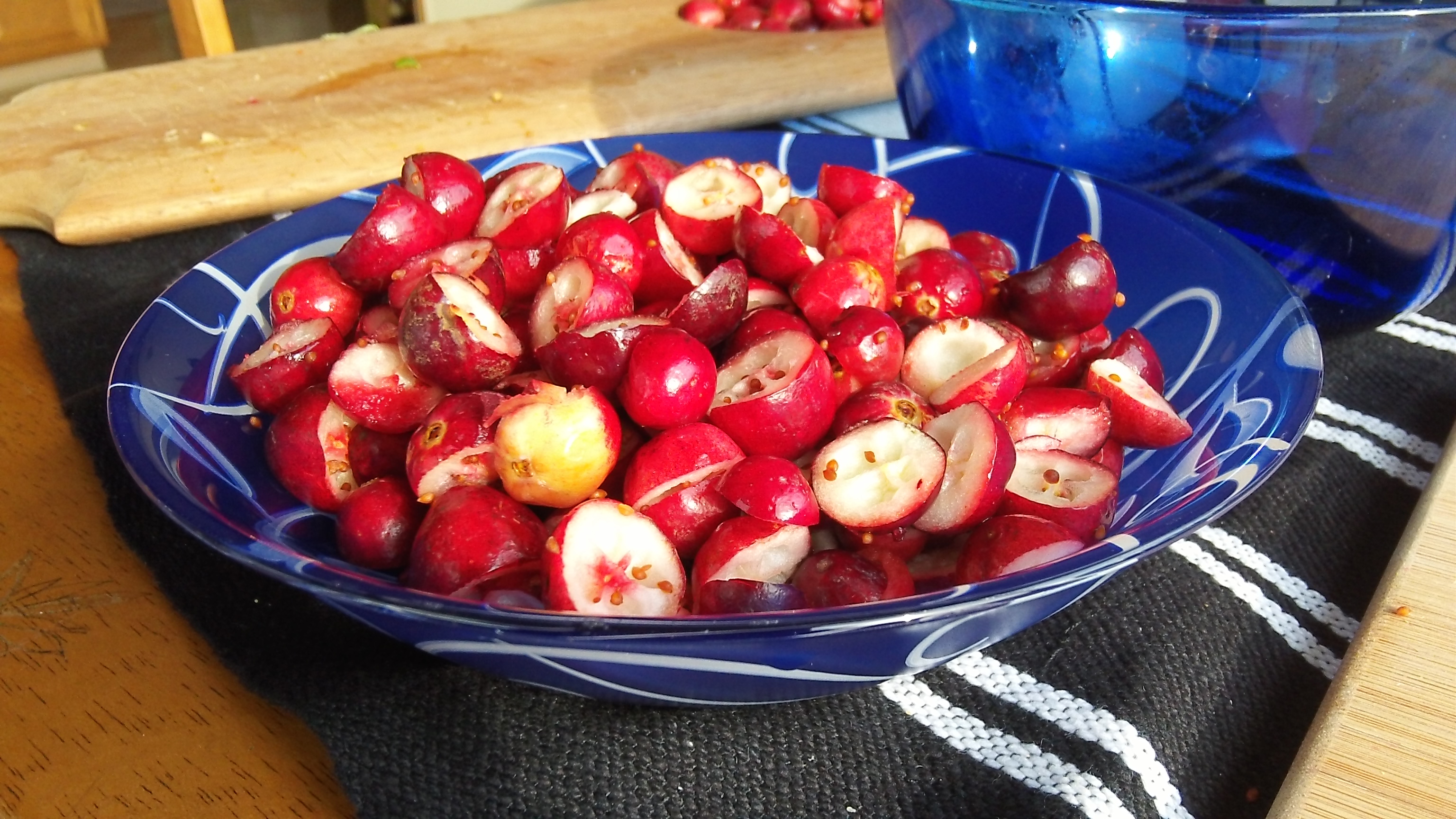
The blog Cacao for a Cause posted today about purchasing a chocolate that expresses the authenticity of your love.  High quality, sustainable chocolate offers a story about community.  Each bar of chocolate produced and distributed with the livelihood of its source community in mind sends a message to your loved one that you care about them and about the world in which you live.  Be with your loved ones this holiday, and remember we are all part of a larger global society.

Life in one Melting Bite

~ Mike Greenberg, February 2012

Examine the sheen, how it reflects light,
your reflection in a bar of heaven.

Then break off a piece, split it in half,
How does it split?
Cleanly, crisply, with a sharp crack?
or mushy, silently, like wax?

Sniff the aroma, the cacao of a plantation,
the scent of workers,
the village of its creation.

I smell berries and wood,
smoke from fires, aromatic symphony in a
tiny
bar.

Then chew, only a little,
let the bar melt.
Stop chewing now or you’ll miss
half the texture,
devouring the piece in three bites.

Melting, melting, dark chocolate goodness,
no need for adulteration by milk.

Taste the labor of nature and humans,
a compact of development,
creating a beautiful substance, not a vice
(that’s Hershey’s domain).

Savor the melting bar,
then rinse and try another.

What’s in a bar?
Everything.
Taste place and purpose,
A combination of elements,
Natural, for our senses.

Life in one melting bite.
Posted in Food Security, Stewardship, Stories | Leave a comment

Stories, stories everywhere

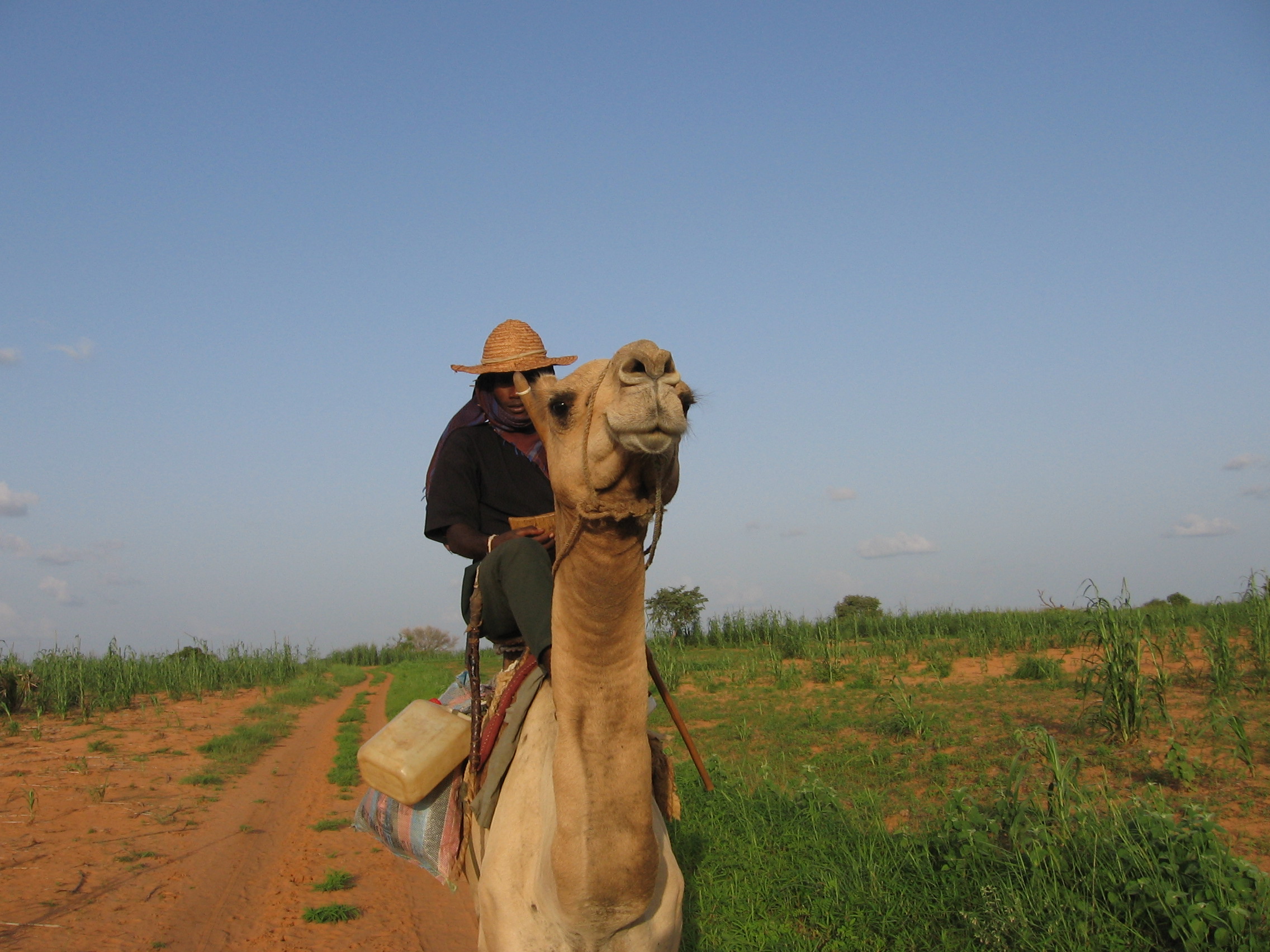
This Fulani and his camel have a story to tell.

How many stories have you heard today?  How many this week?  Did you lose count?  Everything these days seems to be filled to the brim with stories.  Some of these stories are direct narratives, and others are non-linear snapshots.  A collage of people, emotions, senses, and moments.  We persuade through stories, as evidenced in this PsyBlog (thank you to Christopher Allen for sharing).

When we tell with numbers or other forms of data, even if we make the data talk, people rarely experience a deep response.  A story creates a point of reference, either through a sympathetic character or setting or through something or someone completely foreign but deeply interesting.  Stories embody that which makes life worth living.

So, what do stories have to do with creating compassionate communities or building bridges to rich diversity?  Everything.  Who are the people you pass in your everyday comings and goings?  Who are your neighbors?  What do they expect from you and from each other?  A stronger fabric of stories leads to a stronger community, for we cannot feel empathy about that which we do not see and do not understand.

I am currently reading a book, The Laws of Simplicity, by John Maeda.  Stories can be simple or complex, and often we desire both.  A complex story appeals to our desire for something to chew on, something to stir up the pot and stimulate our nerve endings.  A simple story with a powerful message, however, is equally good as a stimulant.

In this TED talk about the ideas in the book, John Maeda weaves a kind of meta-narrative.  Very little in our lives these days is simple, yet the simple stuff provides much joy.

Posted in Education, Stories | Leave a comment

Have a Dream, Be a Citizen

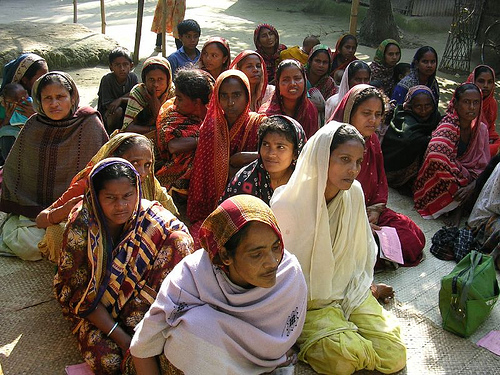
BRAC Community Meeting, Bangladesh. http://www.flickr.com/photos/knobil/66832643/ Creative Commons 2.0: Mark Knobil, 2/11/05. http://creativecommons.org/licenses/by/2.0/deed.en

As Martin Luther King Jr day 2012 comes to a close, I’m reminded to think of this “holiday” as a day on, not a day off.  Dr. King’s message to all of us resonates in how we come together over community issues and recognize our part.  Inequality is toxic; the more we act to keep differences divided, the further we remove ourselves from the possibilities of true growth.  One student in my MBA program said this past weekend that America is not a melting pot.  Rather, it is a salad of rich colors and textures.  We all belong in this salad of diversity, and we all have a role to play.

Community activism spokesperson, Paul Rogat Loeb writes in Soul of a Citizen about Rosa Parks’ story:

Parks’s story also reminds us that as we do tackle common problems, we can discover and develop strengths and passions we never knew we had.  We can begin to reconnect with our fellow human beings, with our wisest and most humane instincts, and with the core of who we are, which we call our soul. – p. 3

How true.  To push away diversity is to eliminate the soul of a community.  In my travels, the tightest and strongest communities, the ones with a palpable heartbeat, are the ones that recognize life as a messy business.  To be alive is to be filled with wonder at the awesome spectrum of fellow citizens we see everyday.

To serve others as a citizen is to have a soul.

To serve only one’s own interests is to discard the web of life and to be dreamless.

I have a dream that everyone digs deep to find their inner citizen who serves, and by serving, everyone plays their part in the resurrection of a community’s soul.

Happy MLK day, with much love and peace.

Posted in Activism, Stewardship | 1 Comment

Raising the level of conversation in 2012

Working Together to Remove Unwanted Invasive Vines, Saw Mill River Parkway, Hastings-on-Hudson NY, 2005 "Free-A-Tree" by Groundwork Hudson Valley

As we begin 2012, a presidential election year, I am reminded of eight years ago when I worked as a field organizer in three rural counties in Maine.  Organizing the local committees to think nationally while acting locally required strong diplomatic skills, and in many ways, communicating between multiple stakeholders to convene around one key objective involved finding the bridge across divergent view points and rallying behind clear solutions, not rhetoric.  A quick glance across the political blogosphere today unveils more rhetoric than solutions, and more character killing than a deep discovery of all the possibilities open to us. There is hope, however, in the solutions-offering writers, like this guest opinion piece in the Seattle Times, where Jamie P. Merisotis discusses opportunities for helping Washington state residents get college degrees.

Furthermore, through the innovation of companies like Lucky Ant and the enabling of crowdfunding, 2012 presents a possibility for new start-ups to become reality. 

My hope and dream is that 2012 is a year of bridges and a year of opportunities.  Arguing policy and criticizing character are both toxic practices.  We should expect more from each other, for the architecture of the future lies within us individually and within our communities.

Posted in Education, Organization Spotlight, Stewardship | Leave a comment

Year’s End: Seeing Through a Different Lens

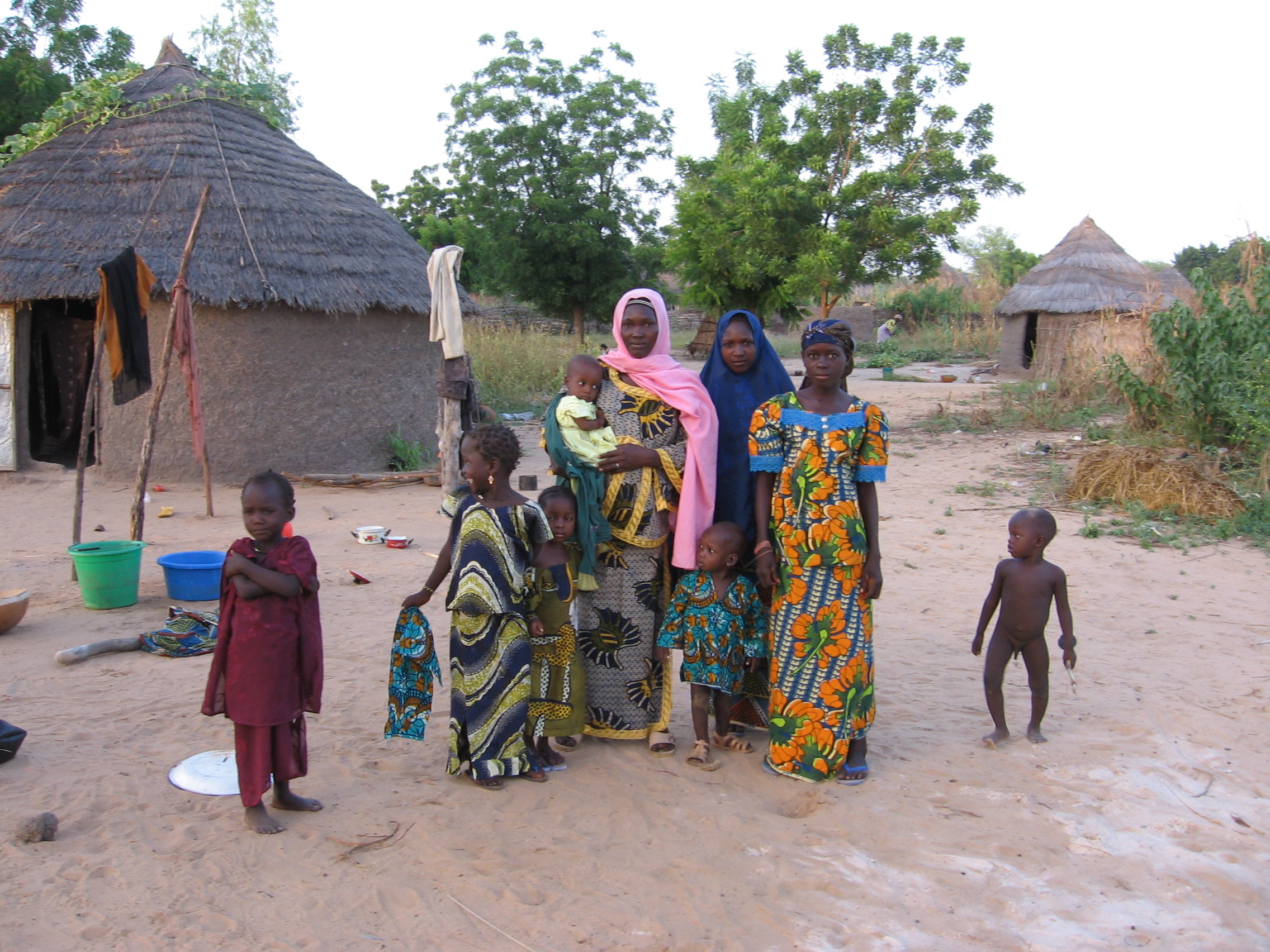
Tonkossare, Niger. "Family Wisdom"

The final week of December is a time of paradox.  As a student, it is my break time, a time to read books not related to school (I’m resisting the temptation to crack open texts for the new quarter).  This is a week to curl up with a hot beverage and enjoy the solitude of long dark wintry nights, remembering to be thankful for the shelter above your head if you have one.  It is a time for thinking about those with no shelter from the storm and ask yourself, how can I be a contribution for a more equitable society?  In philanthropy, it is a time to wrap up a year of donations with a final push (I counted 6 charitable giving emails in my inbox just today).  Time to finish the year strong, prepare new resolutions, break down 2011 calendars and replace with 2012.  It is a time for family and a time for reaching out to the community.  Year end is prime time for relaxation but not laziness; there’s still much work to do.

A new year is defined by both the continuation of traditions and the commencement of new practices.  This coming January 13th will mark six years since I arrived in Niger for the first time, and nine short months from that point I will have been back on American soil as long as I had been away.  We’re all changing, slowly, sometimes imperceptibly, seeing the world slightly differently each season.

How can we alter our lens to see something ordinary in an extraordinary light?  How can we look to our elders and our youth for the next big solution?  Good Magazine, in its 30 Days of Good column on microphilanthropy this month offers the wisdom of children, creative solutions from creative young minds on a shoestring budget.

This form of philanthropy is not about the size of the account or the number of zeros on the check; it’s about community and engaging our youth to be the artists of future ideas.

Happy New Year, fellow citizens of the world.

Posted in Education, Stewardship | Leave a comment

No bad news this holiday season?

In my graduate program on sustainable business, we talk about voices of judgment that need to be channeled effectively so they do not serve to curb our creativity and delight in innovation.  Perfection is one voice of judgement held by many, the notion that something must be perfect before it is launched, rather than allowing evolution to take place in real-time and with community input.  A voice of judgment I too often fall victim to is “Doomsday Don,” the personification of my stream of consciousness focusing on all the bad news in the world.  We live in challenging times, and it is easy to only see the doom and gloom when one reads articles about the expansion of people living in poverty.

Yes, the poor are getting poorer and larger in numbers, but in the same week, I also read an article about good things happening in Africa.  Times of crisis are on the flip side times of innovation and times when communities come together.  The only thing to fear in a crisis is missing out on the opportunities.

Hold the good news and bad news in balance; for every piece of sadness you read, seek out one of joy.  Remember, every storm begins with a calm and often beautiful sunrise, ending with a fantastic sunset.

Sunset in Tonkossare, Niger

Posted in Faith, Stewardship | Leave a comment

Nelson Mandela’s Long Walk to Freedom and the Essence of Leadership

This time of year always causes me to reflect on my experiences on the African continent, in South Africa, Niger, Ghana, Burkina Faso, and Benin.  In the northern latitudes, we witness the dramatic shortening of days — quite extreme here in the Pacific Northwest.  We celebrate with friends and family, light candles and fires in fireplaces, bake delicious treats, and drink beverages to warm and sooth our soul as it hibernates for the months ahead.  Much of the African continent does not experience a major shortening of days, yet the spirit of community, of friends and family is strong.  These are ties that do not need the cycle of seasons to illuminate them.

In this period of global unrest, I was pleased to see Nelson Mandela’s autobiography, Long Walk to Freedom highlighted in the Financial Times last Sunday.  As one of the world’s most inspirational leaders, Mandela’s journey and the concept of ubuntu, of which I wrote earlier in this column, serve as a reminder for why we have business schools and why we must hold our leaders to a higher standard.

As 2011 comes to a close, take time to read Long Walk to Freedom and consider how our political, business, and neighborhood leaders can answer this higher call and live to serve their fellow brothers and sisters.  For if we cannot live with that purpose, what are we celebrating?

Posted in Activism, Faith, Stewardship | 1 Comment

Tell Stories, Form Bridges

Nicholoas Kristof announced his Win-A-Trip 2012 contest this past week, an opportunity this year open to students only to travel with him for ten days to two weeks and blog with both written and video content.  He describes what he’s looking for in fairly vague terms:

So what kind of a person am I looking for? The truth is, I’m not entirely sure – except that I want someone with excellent communication skills, who can blog and vlog (video blog) in ways that will capture the interest of other readers. If you’ve done blogging, vlogging or journalism, be sure to mention that — in sparkling prose! Ditto for anything else that makes you special or will make your voice more memorable.

While I am not sure if I will apply yet, the concept is intriguing and, as Kristof says, one need not win this contest to have this type of trip.  I’ve already experienced the “on the ground” part, but I only documented my Niger journey the “old-fashioned way,” with pen and paper and a camera — no instant sharing.  My sharing happened monthly, or perhaps even less frequently than that, given the slow internet connections and other uploading challenges.  The deeper sharing happened (and continues to happen) upon my return.

Touching stories about life, tales that make us laugh and cry, are everywhere — not just overseas.  We are all a collection of stories, a human anthology, and those who understand the stories that are not their own, those who take these stories to others to paint a holistic image of what it means to be alive in this century, these are the bridge builders for tomorrow.

My term in Bainbridge Graduate Institute’s Using the Social Web for Social Change class is coming to an end (one more post left for me to write), but this blog will continue in a second iteration and beyond.  As this first iteration closes, I have a few questions for my readers:

What  was your favorite post thus far?

What topics would you like to see me address in the coming months?

How can I better connect to you, the reader?

Happy December, happy story telling. Remember, you do not need to travel to have a trip.

Posted in Education, Stories | Leave a comment

The Happo-Dammo Ratio, Buying Local: Bridge Building this Holiday Season

This past week, the BGI blog republished the HappoDammo Ratio, a term coined by Gifford Pinchot III.  Referring to the happiness created by an activity, divided by the damage done by that activity, HappoDammo looms large during the holiday season.  On a personal level, many of us subject ourselves to the stress of traveling on crowded buses and planes to be with loved ones this month.  On a global level, what is the carbon footprint of our efforts to ring in a cheerful season’s greetings and an exuberant new year?  Do the math after Black Friday, and HappoDammo might not actually be in the black.  But there is hope.

I pledge to buy local gifts this holiday season, and even when I am not purchasing a present, I pledge to consider the HappoDammo of each act.  Local food exchanges amongst family members is a great way to keep that HappoDammo positive, for these dollars spent in the community stay in the community.  Each year I toy with the thought of a giftless season; however, buying local, compostable goods seems even higher on the Happo end of the scale than buying nothing.

It is amazing to me how many sports events, mostly football, compete with family bandwidth on Thanksgiving, Christmas, and New Years.  When we could be out enjoying the winter weather (if it isn’t too nasty) or conversing over malt cider, TVs are tuned in to the big game while stereos and not voices are raised in song.

In the spirit of HappoDammo and buying local, we must also recognize those holidays without big dollar signs.  I spent three seasons lighting Hanukkah candles in the desert in Niger, and the warmth from the candles coincided with the cold season (yes, even the desert gets cold once in a while).  HappoDammo means using what you have, loving who you are with, and not stretching beyond your means.

Take time this month to consider the happiness of your actions divided by any damage inflicted.  The goal is to raise that Happo numerator, but do not forget about lowering the denominator as a bridge to the new year.

Posted in Stewardship | 2 Comments

Thankfulness

As the Thanksgiving season approaches, I recall holidays of my youth, pies baking in the oven, short drives across the county to Grandma’s house for a multi-generational feast, and returning at night to see the first lights of the winter season in homes and on trees.  Years passed, people moved away, and the feast now occurs in a retirement community.  The food might not have that same home-cooked flavor as it did in previous years, but ultimately Thanksgiving is about community.  The people stay the same, or they change.  The spirit of community, however, is solid.

I celebrated Thanksgiving a few times in Niger, with volunteers and our Nigerien counterparts, and while the food tasted different, Nigeriens understood this holiday completely.  It is about love and friendship.  It is about acknowledging those who are absent from the table, and it is about reaching out to those who lack a table at all.

Tonight I attended a Thanksgiving gathering that began in 2005 in New Orleans, post hurricane Katrina.  Turkey and all the fixings were difficult to procure in the aftermath of the storm, but a group of friends gathered regardless, bringing bourbon to drink and whatever food was available.  As the city’s faithful collaborated to resurrect community, these friends created a Thanksgiving based on the essentials: not the food but the people.  They’ve held this bourbon and pot luck Thanksgiving every year since.

Connect with someone you’ve missed this Thanksgiving.  Share a laugh, share a smile.  Share community.

Happy Thanksgiving!

Posted in Faith, Stewardship | 1 Comment